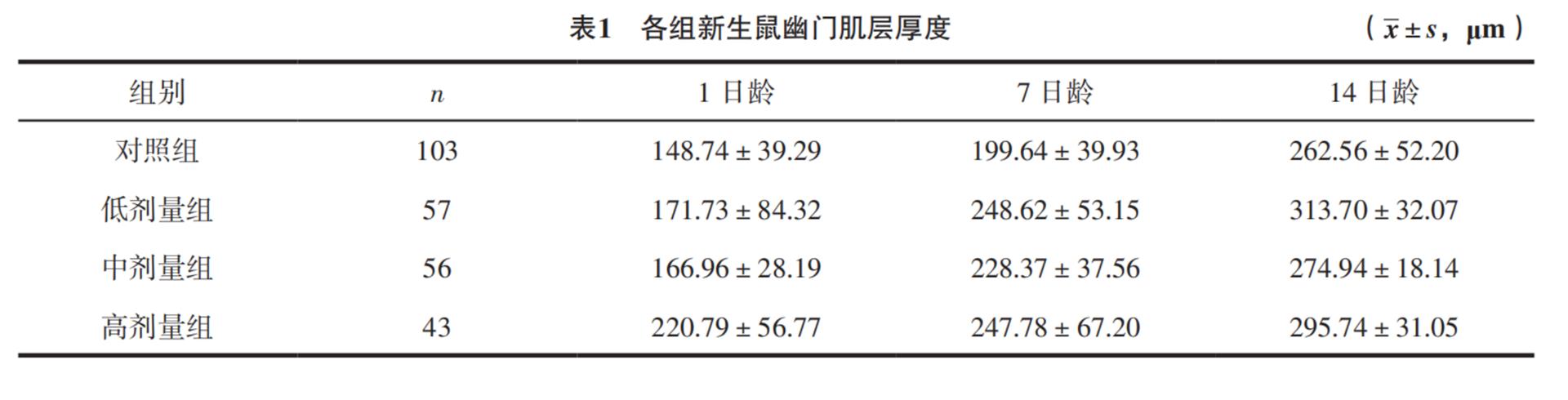
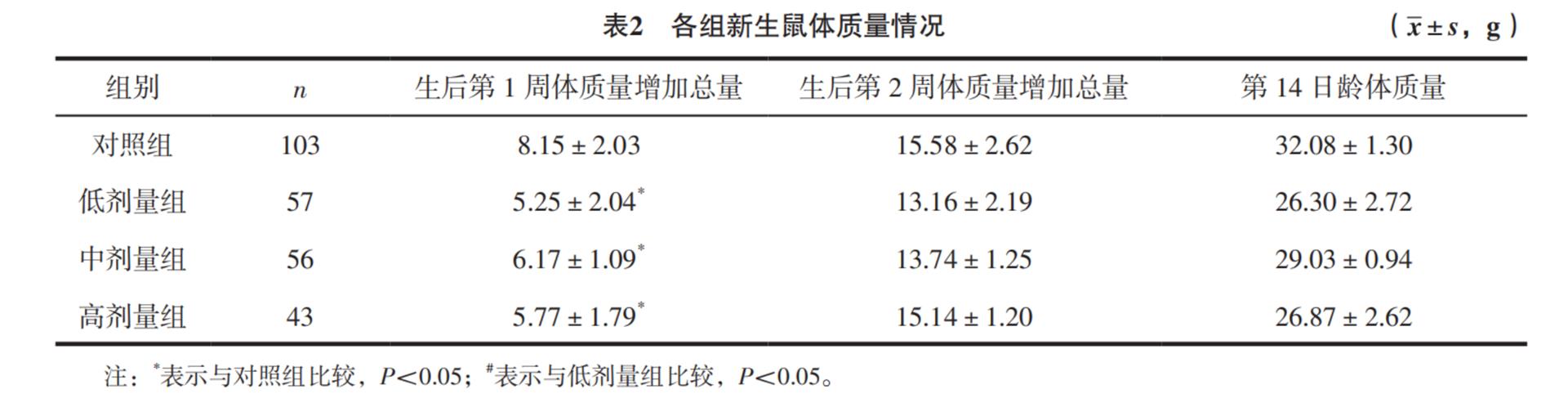
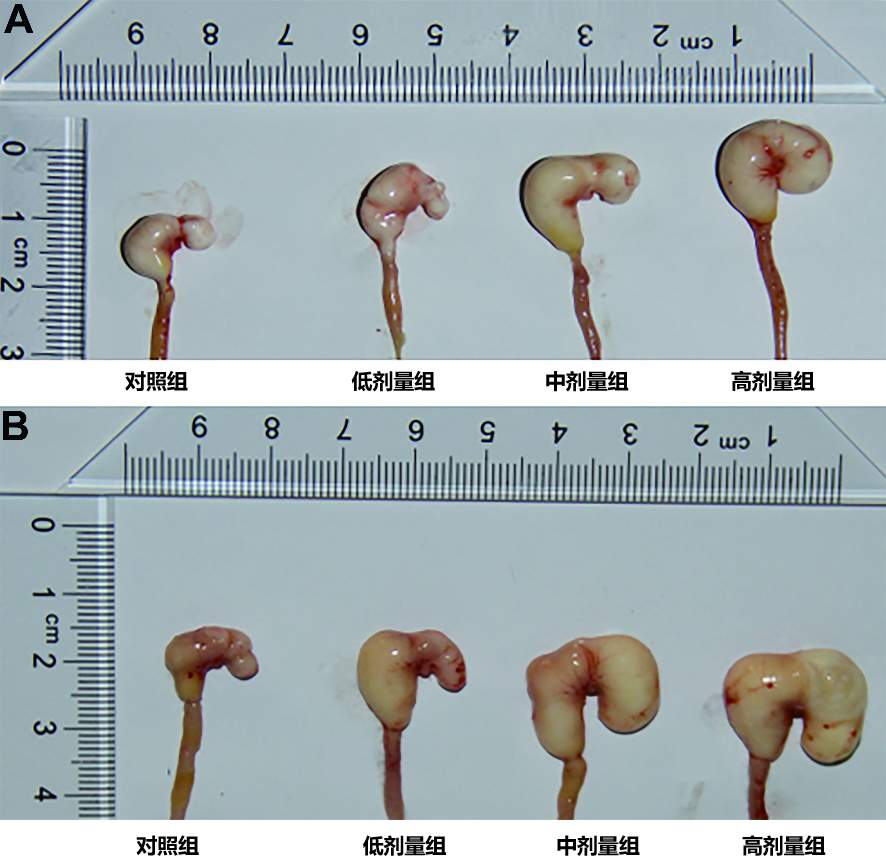
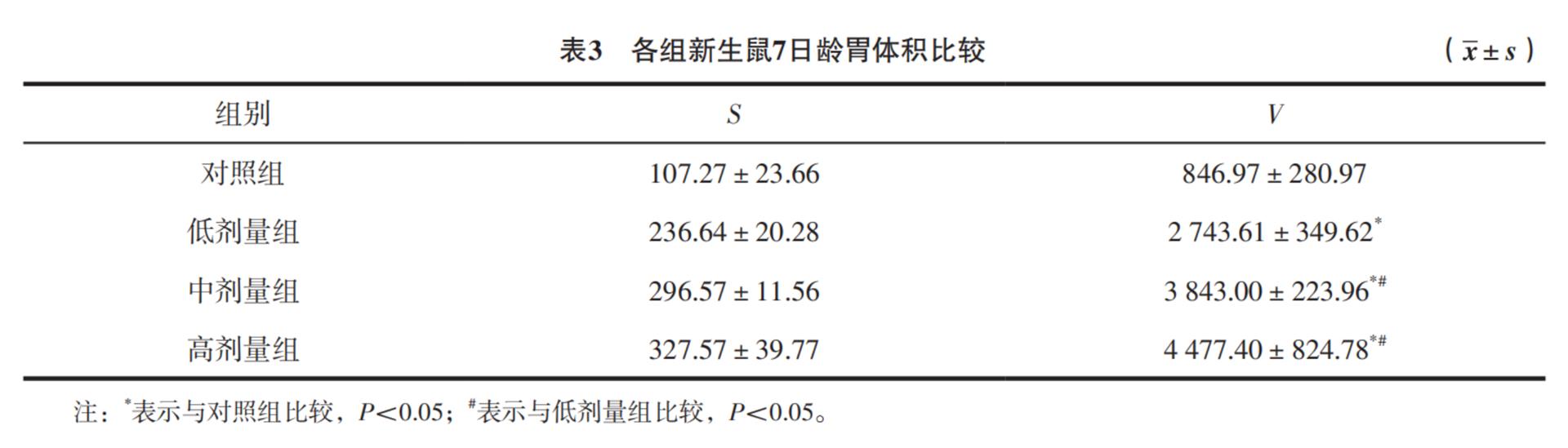
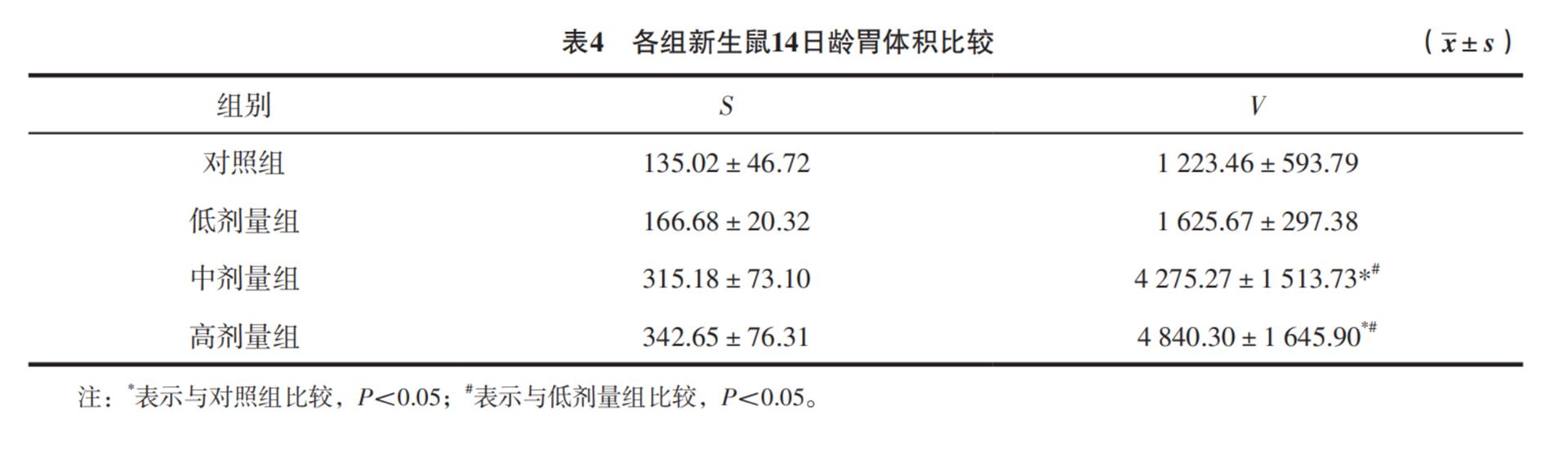
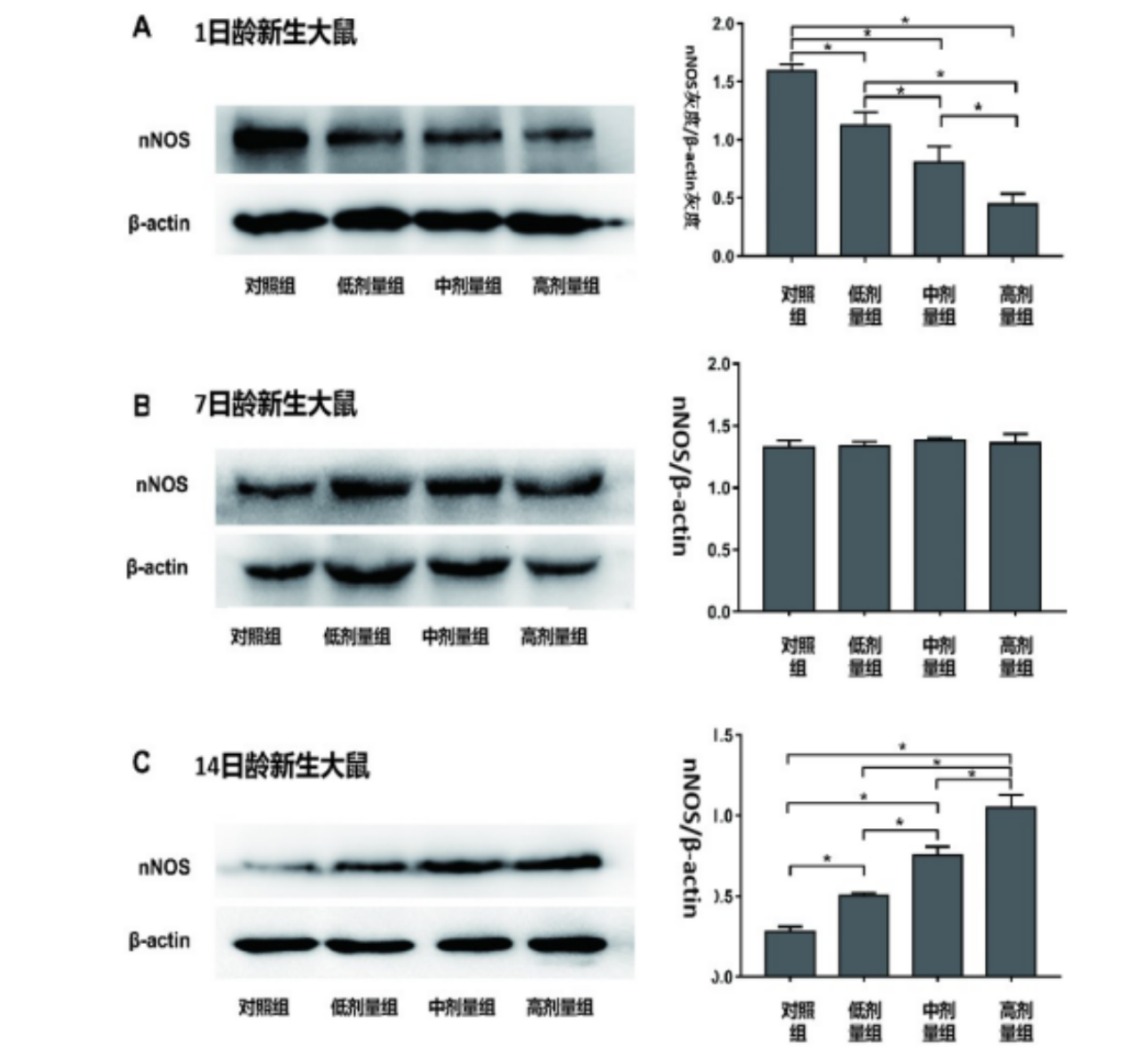
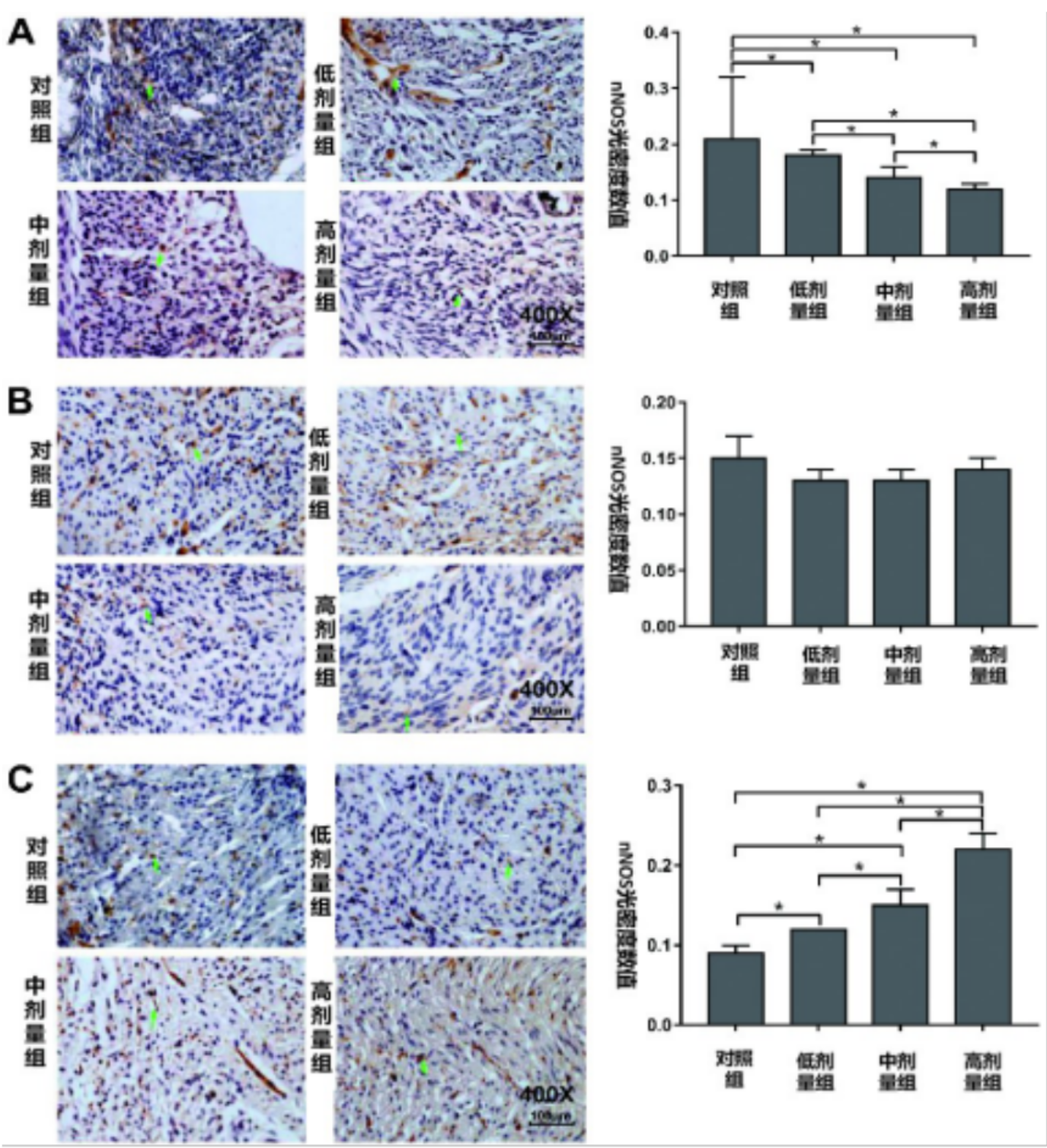
Objective To explore the effect of nNOS on the early postnatal pylorus of neonatal rats under the inhibition of the inhibitor N-nitro-L-arginine methyl ester hydrochloride(L-NAME),in order to further investigate the pathogenic mechanism of infantile hypertrophic pyloric stenosis(IHPS).Methods Pregnant female mice were grouped randomly and administered by gavage,with the control group receiving physiological saline,the low-dose,medium-dose and high-dose groups receiving different doses of L-NAME.For the neonatal rats,the control group was subcutaneously injected with physiological saline,while the low-dose group,medium-dose group,and high-dose group were subcutaneously injected with different doses of L-NAME.The expression of nNOS in the pylorus,weight gain,gastric retention,and pyloric muscle thickness of newborn rats were statistically analyzed.Results (1) The thickness of the pyloric muscle layer in the low-dose group,medium-dose group,and high-dose group of newborn rats was higher than that in the control group on the 1st,7th,and 14th day after birth,but there was no significant difference.(2)Compared with the control group,the neonatal rats in the low-dose group,the middle-dose group and the high-dose group gained less weight in the first week after birth,and the gastric retention was more significant.There was no significant difference in weight gain among the groups in the second week after birth.(3)On the 14th day after birth,the gastric volume of the medium-dose group was larger than that of the low-dose group,but there was no statistical difference between the low-dose group and the control group,or between the medium-dose group and the high-dose group.(4)On the first day after birth,the expression of nNOS in the pylorus of neonatal rats was significantly inhibited by L-NAME with dose-dependence,and this effect gradually disappeared with increasing age of neonatal rats.(5) Under the action of different doses of L-NAME,the expression level and trend of nNOS in the pylorus of neonatal mice vary at different time points.Conclusions (1) nNOS can cause gastric retention and pyloric obstruction in newborn rats,which is related to IHPS related symptoms,but may not be the only molecular mechanism of IHPS etiology.(2) The expression level of nNOS in the pyloric tissue of newborn mice can be regulated through a negative feedback regulatory mechanism.(3) Upregulation of nNOS expression may contribute to pyloric dilation,but may not completely reverse thickening and obstruction of the pylorus in IHPS.


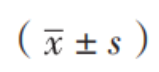 表示,统计方法采用正态检验、单因素方差分析,组间两两比较采用Bonferroni、LSD-t检验法,P<0.05为有统计学意义。