1、WU S,WU B,LIU M,et al.Stroke in China:Advances and challenges in epidemiology,prevention,and management[J].Lancet Neurol,2019,18(4):394-405.
WU S,WU B,LIU M,et al.Stroke in China:Advances and challenges in epidemiology,prevention,and management[J].Lancet Neurol,2019,18(4):394-405.
2、XIA F,KEEP R F,YE F,et al.The fate of erythrocytes after cerebral hemorrhage[J].Transl Stroke Res,2022,13(5):655-664.XIA F,KEEP R F,YE F,et al.The fate of erythrocytes after cerebral hemorrhage[J].Transl Stroke Res,2022,13(5):655-664.
3、XUE M,YONG V W.Neuroinflammation in intracerebral haemorrhage:Immunotherapies with potential for translation[J].Lancet Neurol,2020,19(12):1023-1032.
XUE M,YONG V W.Neuroinflammation in intracerebral haemorrhage:Immunotherapies with potential for translation[J].Lancet Neurol,2020,19(12):1023-1032.
4、 GUO Y,DAI W,ZHENG Y,et al.Mechanism and regulation of microglia polarization in intracerebral hemorrhage[J].Molecules,2022,27(20):7080.
GUO Y,DAI W,ZHENG Y,et al.Mechanism and regulation of microglia polarization in intracerebral hemorrhage[J].Molecules,2022,27(20):7080.
5、LAN X,HAN X,LI Q,et al.Modulators of microglial activation and polarization after intracerebral haemorrhage[J].Nat Rev Neurol,2017,13(7):420-433.
LAN X,HAN X,LI Q,et al.Modulators of microglial activation and polarization after intracerebral haemorrhage[J].Nat Rev Neurol,2017,13(7):420-433.
6、DASARI R,BONSACK F,SUKUMARI-RAMESH S.Brain injury and repair after intracerebral hemorrhage:The role of microglia and brain-infiltrating macrophages[J].Neurochem Int,2021(142):104923.DASARI R,BONSACK F,SUKUMARI-RAMESH S.Brain injury and repair after intracerebral hemorrhage:The role of microglia and brain-infiltrating macrophages[J].Neurochem Int,2021(142):104923.
7、BAI Q,XUE M,YONG V W.Microglia and macrophage phenotypes in intracerebral haemorrhage injury:Therapeutic opportunities[J].Brain,2020,143(5):1297-1314.
BAI Q,XUE M,YONG V W.Microglia and macrophage phenotypes in intracerebral haemorrhage injury:Therapeutic opportunities[J].Brain,2020,143(5):1297-1314.
8、LIU J,LIU L,WANG X,et al.Microglia:A double-edged sword in intracerebral hemorrhage from basic mechanisms to clinical research[J].Front Immunol,2021(12):675660.
LIU J,LIU L,WANG X,et al.Microglia:A double-edged sword in intracerebral hemorrhage from basic mechanisms to clinical research[J].Front Immunol,2021(12):675660.
9、LIU C H,ZHANG W D,WANG J J,et al.Senegenin ameliorate acute lung injury through reduction of oxidative stress and inhibition of inflammation in cecal ligation and puncture-induced sepsis rats[J].Inflammation,2016,39(2):900-906.
LIU C H,ZHANG W D,WANG J J,et al.Senegenin ameliorate acute lung injury through reduction of oxidative stress and inhibition of inflammation in cecal ligation and puncture-induced sepsis rats[J].Inflammation,2016,39(2):900-906.
10、REN X,ZHANG J,ZHAO Y,et al.Senegenin inhibits Aβ(1-42)-induced PC12 cells apoptosis and oxidative stress via activation of the PI3K/Akt signaling pathway[J].Neuropsychiatr Dis Treat,2022(18):513-524.REN X,ZHANG J,ZHAO Y,et al.Senegenin inhibits Aβ(1-42)-induced PC12 cells apoptosis and oxidative stress via activation of the PI3K/Akt signaling pathway[J].Neuropsychiatr Dis Treat,2022(18):513-524.
11、ZHANG S Q,WU M F,GU R,et al.Senegenin inhibits neuronal apoptosis after spinal cord contusion injury[J].Neural Regen Res,2016,11(4):657-663.ZHANG S Q,WU M F,GU R,et al.Senegenin inhibits neuronal apoptosis after spinal cord contusion injury[J].Neural Regen Res,2016,11(4):657-663.
12、WANG P,SHEN Y,MANAENKO A,et al.TMT-based quantitative proteomics reveals the protective mechanism of tenuigenin after experimental intracerebral hemorrhage in mice[J].J Ethnopharmacol,2024,319(Pt 2):117213.WANG P,SHEN Y,MANAENKO A,et al.TMT-based quantitative proteomics reveals the protective mechanism of tenuigenin after experimental intracerebral hemorrhage in mice[J].J Ethnopharmacol,2024,319(Pt 2):117213.
13、 YIN X P,CHEN Z Y,ZHOU J,et al.Mechanisms underlying the perifocal neuroprotective effect of the Nrf2-ARE signaling pathway after intracranial hemorrhage[J].Drug Des Devel Ther,2015(9):5973-5986.
YIN X P,CHEN Z Y,ZHOU J,et al.Mechanisms underlying the perifocal neuroprotective effect of the Nrf2-ARE signaling pathway after intracranial hemorrhage[J].Drug Des Devel Ther,2015(9):5973-5986.
14、FAN L,JIN L,TANG T,et al.Neutrophil-like pH-responsive pro-efferocytic nanoparticles improve neurological recovery by promoting erythrophagocytosis after intracerebral hemorrhage[J].Theranostics,2024,14(1):283-303.
FAN L,JIN L,TANG T,et al.Neutrophil-like pH-responsive pro-efferocytic nanoparticles improve neurological recovery by promoting erythrophagocytosis after intracerebral hemorrhage[J].Theranostics,2024,14(1):283-303.
15、 SHAO Z,TU S,SHAO A.Pathophysiological mechanisms and potential therapeutic targets in intracerebral hemorrhage[J].Front Pharmacol,2019(10):1079.
SHAO Z,TU S,SHAO A.Pathophysiological mechanisms and potential therapeutic targets in intracerebral hemorrhage[J].Front Pharmacol,2019(10):1079.
16、AL-KAWAZ M N,HANLEY D F,ZIAI W.Advances in therapeutic approaches for spontaneous intracerebral hemorrhage[J].Neurotherapeutics,2020,17(4):1757-1767.
AL-KAWAZ M N,HANLEY D F,ZIAI W.Advances in therapeutic approaches for spontaneous intracerebral hemorrhage[J].Neurotherapeutics,2020,17(4):1757-1767.
17、DUAN T,LI L,YU Y,et al.Traditional Chinese medicine use in the pathophysiological processes of intracerebral hemorrhage and comparison with conventional therapy[J].Pharmacol Res,2022(179):106200.
DUAN T,LI L,YU Y,et al.Traditional Chinese medicine use in the pathophysiological processes of intracerebral hemorrhage and comparison with conventional therapy[J].Pharmacol Res,2022(179):106200.
18、ZHOU Z,YU Y,MIAO J,et al.Research progress of traditional Chinese medicine in treating central nervous system diseases by modulating ferroptosis[J].Am J Chin Med,2024,52(7):1989-2019.ZHOU Z,YU Y,MIAO J,et al.Research progress of traditional Chinese medicine in treating central nervous system diseases by modulating ferroptosis[J].Am J Chin Med,2024,52(7):1989-2019.
19、XU H,LU J,TANG X,et al.Traditional Chinese medicine and ferroptosis in intracerebral hemorrhage:A potential therapeutic approach[J].Drug Des Devel Ther,2025(19):4789-4808.XU H,LU J,TANG X,et al.Traditional Chinese medicine and ferroptosis in intracerebral hemorrhage:A potential therapeutic approach[J].Drug Des Devel Ther,2025(19):4789-4808.
20、 SUN Z,ZHANG X,LI M,et al.Targeting ferroptosis in treating traumatic brain injury:Harnessing the power of traditional Chinese medicine[J].Biomed Pharmacother,2024(180):117555.
SUN Z,ZHANG X,LI M,et al.Targeting ferroptosis in treating traumatic brain injury:Harnessing the power of traditional Chinese medicine[J].Biomed Pharmacother,2024(180):117555.
21、ZHOU Y,YAN M,PAN R,et al.Radix Polygalae extract exerts antidepressant effects in behavioral despair mice and chronic restraint stress-induced rats probably by promoting autophagy and inhibiting neuroinflammation[J].J Ethnopharmacol,2021(265):113317.ZHOU Y,YAN M,PAN R,et al.Radix Polygalae extract exerts antidepressant effects in behavioral despair mice and chronic restraint stress-induced rats probably by promoting autophagy and inhibiting neuroinflammation[J].J Ethnopharmacol,2021(265):113317.
22、ZHANG D,ZHANG W,DENG S,et al.Tenuigenin promotes non-rapid eye movement sleep via the GABAA receptor and exerts somnogenic effect in a MPTP mouse model of Parkinson’s disease[J].Biomed Pharmacother,2023(165):115259.ZHANG D,ZHANG W,DENG S,et al.Tenuigenin promotes non-rapid eye movement sleep via the GABAA receptor and exerts somnogenic effect in a MPTP mouse model of Parkinson’s disease[J].Biomed Pharmacother,2023(165):115259.
23、FAN Z,LIANG Z,YANG H,et al.Tenuigenin protects dopaminergic neurons from inflammation via suppressing NLRP3 inflammasome activation in microglia[J].J Neuroinflammation,2017,14(1):256.
FAN Z,LIANG Z,YANG H,et al.Tenuigenin protects dopaminergic neurons from inflammation via suppressing NLRP3 inflammasome activation in microglia[J].J Neuroinflammation,2017,14(1):256.
24、CHOI J G,KIM H G,KIM M C,et al.Polygalae radix inhibits toxin-induced neuronal death in the Parkinson’s disease models[J].J Ethnopharmacol,2011,134(2):414-421.
CHOI J G,KIM H G,KIM M C,et al.Polygalae radix inhibits toxin-induced neuronal death in the Parkinson’s disease models[J].J Ethnopharmacol,2011,134(2):414-421.
25、ZHAO X,HE M J,ZHAO M,et al.Crude Polygalae Radix after boiling with licorice decoction alleviates intestinal mucosal barrier injury of rats by regulating TLR4/NF-κB signaling pathway[J].J Ethnopharmacol,2025(346):119661.
ZHAO X,HE M J,ZHAO M,et al.Crude Polygalae Radix after boiling with licorice decoction alleviates intestinal mucosal barrier injury of rats by regulating TLR4/NF-κB signaling pathway[J].J Ethnopharmacol,2025(346):119661.
26、 ZHANG L,YONG Y Y,DENG L,et al.Therapeutic potential of Polygala saponins in neurological diseases[J].Phytomedicine,2023(108):154483. ZHANG L,YONG Y Y,DENG L,et al.Therapeutic potential of Polygala saponins in neurological diseases[J].Phytomedicine,2023(108):154483.
27、ZHANG Y,YU W,LIU Y,et al.Regulation of nuclear factor erythroid-2-related factor 2 as a potential therapeutic target in intracerebral hemorrhage[J].Front Mol Neurosci,2022(15):995518.ZHANG Y,YU W,LIU Y,et al.Regulation of nuclear factor erythroid-2-related factor 2 as a potential therapeutic target in intracerebral hemorrhage[J].Front Mol Neurosci,2022(15):995518.
28、IMAI T,MATSUBARA H,HARA H.Potential therapeutic effects of Nrf2 activators on intracranial hemorrhage[J].J Cereb Blood Flow Metab,2021,41(7):1483-1500.
IMAI T,MATSUBARA H,HARA H.Potential therapeutic effects of Nrf2 activators on intracranial hemorrhage[J].J Cereb Blood Flow Metab,2021,41(7):1483-1500.
29、 HU L,CAO Y,CHEN H,et al.The novel Nrf2 activator omaveloxolone regulates microglia phenotype and ameliorates secondary brain injury after intracerebral hemorrhage in mice[J].Oxid Med Cell Longev,2022(2022):4564471.
HU L,CAO Y,CHEN H,et al.The novel Nrf2 activator omaveloxolone regulates microglia phenotype and ameliorates secondary brain injury after intracerebral hemorrhage in mice[J].Oxid Med Cell Longev,2022(2022):4564471.
30、SUGIYAMA T,IMAI T,NAKAMURA S,et al.A novel Nrf2 activator,RS9,attenuates secondary brain injury after intracerebral hemorrhage in sub-acute phase[J].Brain Res,2018(1701):137-145.
SUGIYAMA T,IMAI T,NAKAMURA S,et al.A novel Nrf2 activator,RS9,attenuates secondary brain injury after intracerebral hemorrhage in sub-acute phase[J].Brain Res,2018(1701):137-145.
31、MAO N,ZHANG M,SHEN M,et al.Research progress on ferroptosis in cerebral hemorrhage[J].Biomed Pharmacother,2025(185):117932.MAO N,ZHANG M,SHEN M,et al.Research progress on ferroptosis in cerebral hemorrhage[J].Biomed Pharmacother,2025(185):117932.
32、SUN K Y,BAI X Y,ZHANG L,et al.A new strategy for the treatment of intracerebral hemorrhage:Ferroptosis[J].Exp Neurol,2024(382):114961.
SUN K Y,BAI X Y,ZHANG L,et al.A new strategy for the treatment of intracerebral hemorrhage:Ferroptosis[J].Exp Neurol,2024(382):114961.
33、WANG Y,WU S,LI Q,et al.Pharmacological inhibition of ferroptosis as a therapeutic target for neurodegenerative diseases and strokes[J].Adv Sci,2023,10(24):2300325.
WANG Y,WU S,LI Q,et al.Pharmacological inhibition of ferroptosis as a therapeutic target for neurodegenerative diseases and strokes[J].Adv Sci,2023,10(24):2300325.
34、YANG W,DING N,LUO R,et al.Exosomes from young healthy human plasma promote functional recovery from intracerebral hemorrhage via counteracting ferroptotic injury[J].Bioact Mater,2023(27):1-14.YANG W,DING N,LUO R,et al.Exosomes from young healthy human plasma promote functional recovery from intracerebral hemorrhage via counteracting ferroptotic injury[J].Bioact Mater,2023(27):1-14.


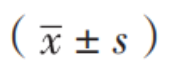 的形式呈现结果,采用单因素方差检验比较组间差异,使用Prism 8.0进行数据分析,P<0.05表示差异有统计学意义。