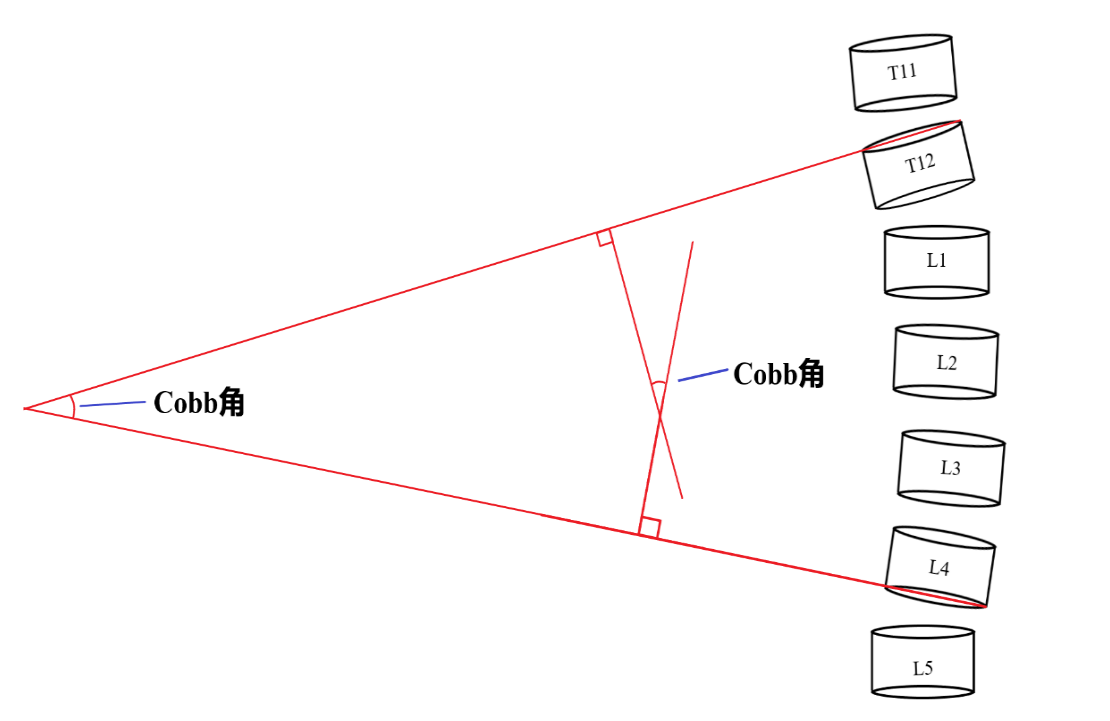
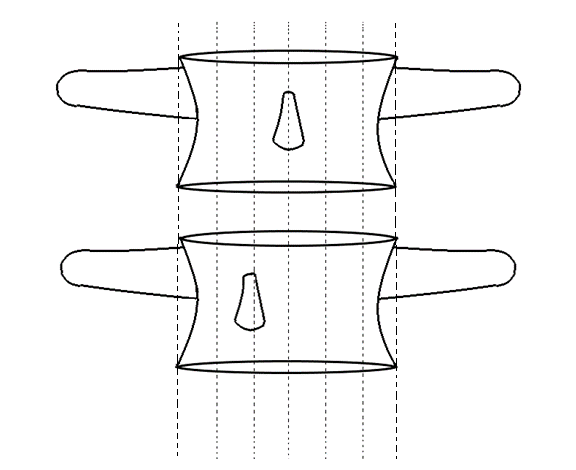
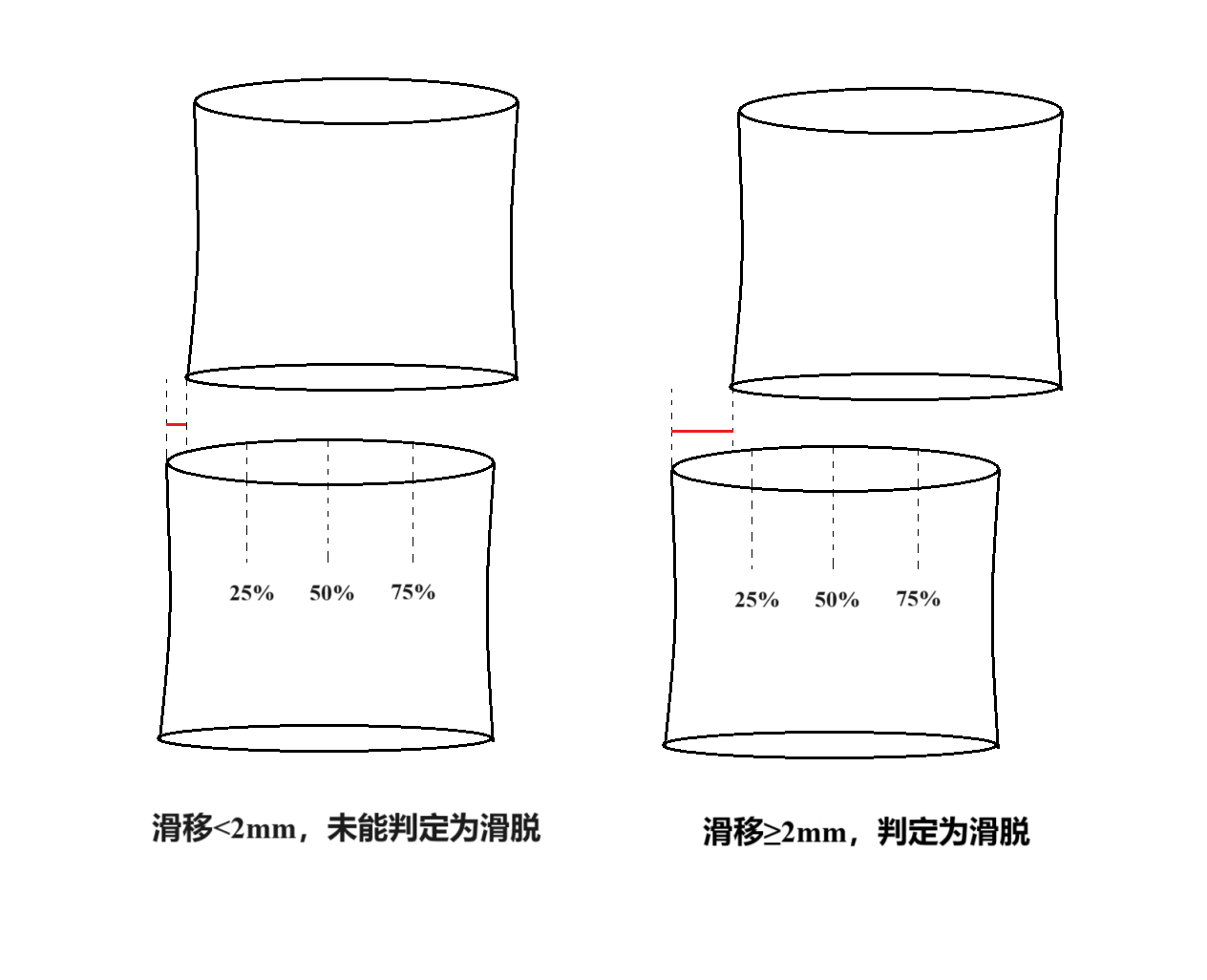
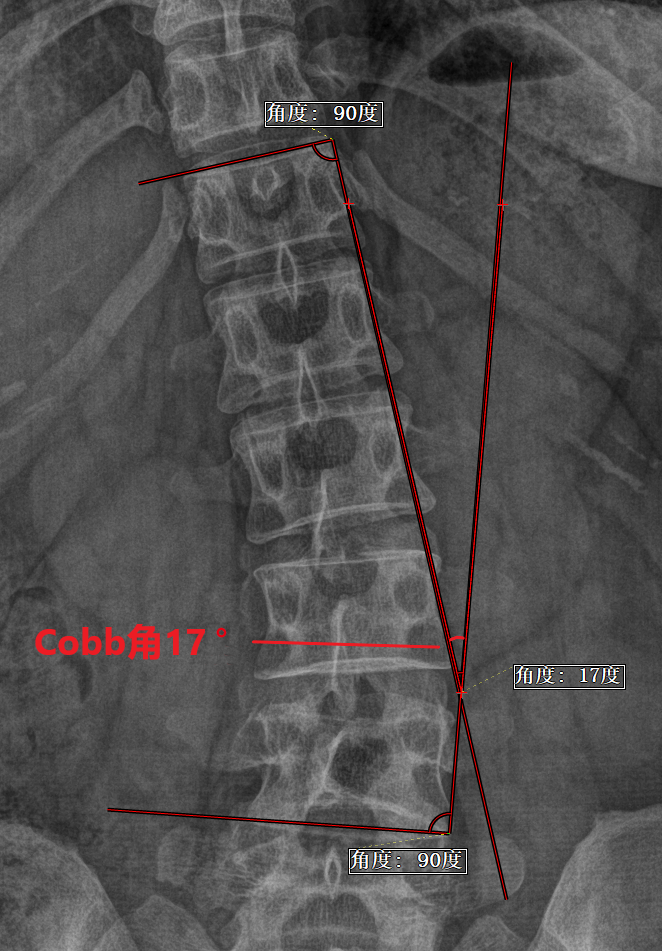
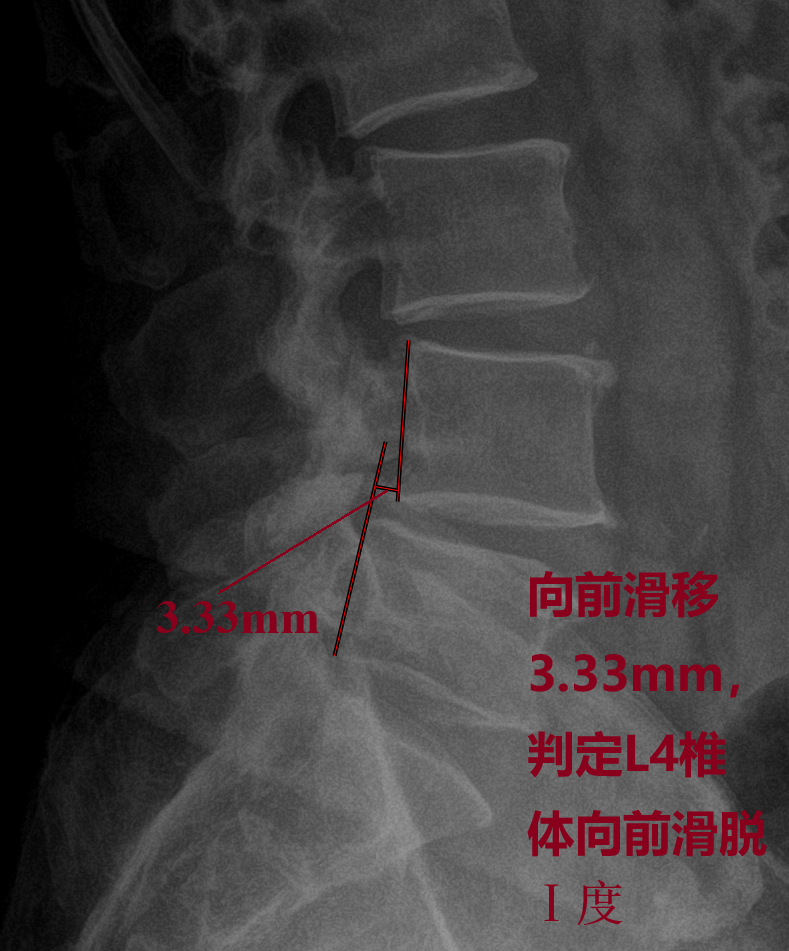
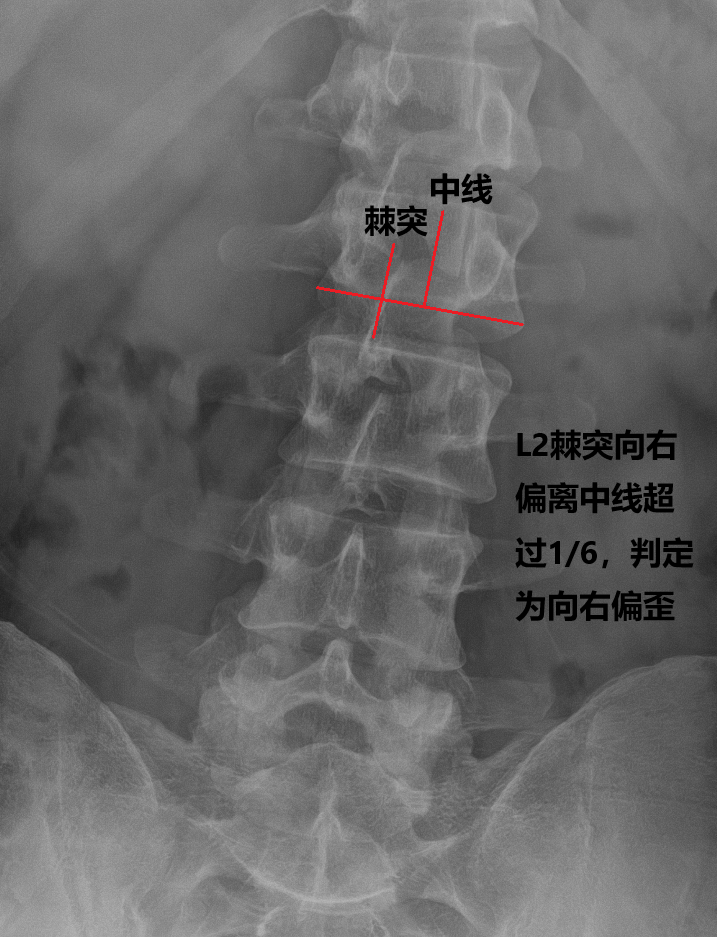
Objective To study the lumbar scoliosis,L1-5 spinous process deviation and spondylolisthesis in spine X-ray of patients with chronic non-specific low back pain(CNLBP),and summarizing the existing rules,so as to provide imaging theoretical support for the treatment of CNLBP.Methods A total of 164 patients with CNLBP were selected.The lumbar scoliosis,L1-5 spinous process deviation and spondylolisthesis were observed and recorded in the anteroposterior and lateral X-ray films of each patient.The lumbar scoliosis,spinous process deviation and spondylolisthesis were statistically analyzed by statistical software.Results A total of 59 people had lumbar scoliosis,accounting for 35.98%.There were 47 patients with 5°-10° Cobb angle,accounting for 28.66%.There were 12 patients with Cobb angle >10°,accounting for 7.32%.L4 was the main lower apical vertebra of lumbar scoliosis.There were 12 patients with L3 as the lower apical vertebra,accounting for 20.34%;37 patients with L4 as the lower apical vertebra,accounting for 62.71%;10 patients with L5 as the lower apical vertebra,accounting for 16.95%.A total of 119 people appeared spinous process deviation,accounting for 72.56%.L5 spinous process deviation was the most common,with proportion of 57.93%,and L4 was the second,with proportion of was 48.17%.The results of chi-square test showed that there were significant differences between L5 and L1-L3 spinous process deviation(χ2 was 14.580,11.771,7.484,and P values were <0.001,0.001,0.006 respectively),but no significant difference between L5 and L4 spinous process(χ2 =3.124,P=0.077).A total of 30 patients had spondylolisthesis,accounting for 18.29%.L5 was the most common of spondylolisthesis,with an occurrence rate of 8.54%.L4 was the second,with an occurrence rate of 7.93%.There was no significant difference in spondylolisthesis rate between L4 and L5(χ2 =0.040,P=0.841).The spondylolisthesis rates of L4 and L5 were significantly different from those of L1,L2 and L3(L5 and L1,L2,L3:χ2 was 14.580,11.771,7.484,and P values was <0.001,0.001,0.006 respectively;L4 and L1,L2,L3:χ2 was 13.495,10.712,6.550,P values were <0.001,0.001,0.010 respectively).Conclusions Lumbar scoliosis is more common in patients with CNLBP,and L4 is the main lower apical vertebra of lumbar scoliosis.Patients with CNLBP often have spinous process deviation,and the most common is L5 spinous process deviation,followed by L4.L5 and L4 are the most common vertebrae with spondylolisthesis in patients with CNLBP.The soft injury and joint degeneration or disorder related to L5 and L4 should be paid more attention in the treatment of patients with CNLBP.
X 线检查作为一项历史悠久的成像技术,具备经济、安全、便捷等优点,在基础和临床研究中扮演着不可或缺的角色[26]。在X线上看到腰椎侧弯,棘突偏歪或者椎体滑脱,其相应的部位可能存在肌肉肌力不等或肌筋膜张力不同,韧带损伤,关节突关节或者骶髂关节退行性变或紊乱,从而导致腰痛症状的发生。文中通过侧弯、棘突偏歪、椎体滑脱三个方面观察腰椎,均发现L4、L5椎体与慢性退行性腰痛关系密切。冠状位:腰椎侧弯以L4为下端椎为主;水平位:腰椎体旋转以L5、L4最常见;矢状位:腰椎滑脱最常发生于L5、L4。因此,在治疗慢性退行性腰痛患者时,与L5、L4相关的肌肉、筋膜等软损伤以及关节退行性变或紊乱应引起重点关注。